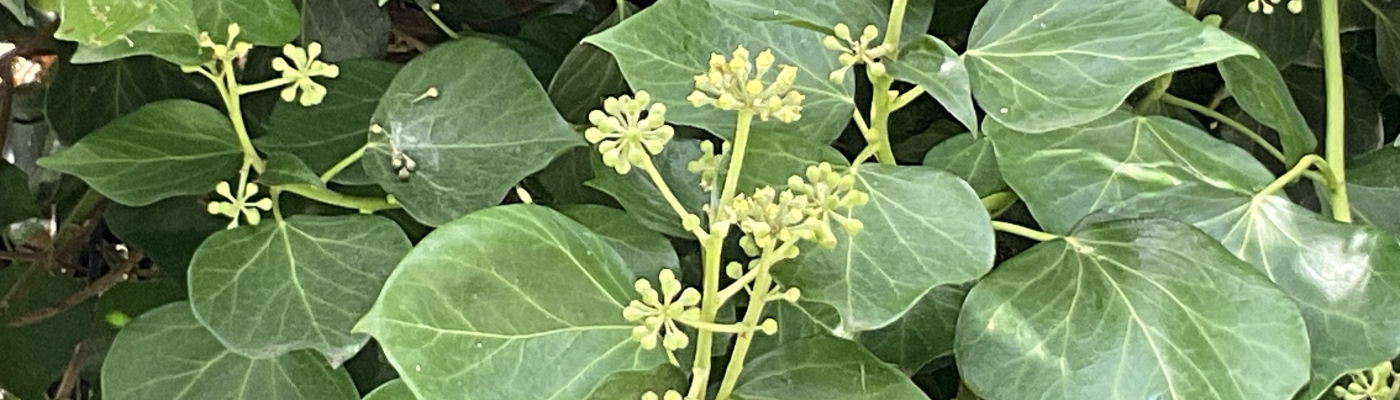
Clinging, climbing, creeping… ivy certainly knows how to make itself at home! It scrambles up walls, wraps itself around tree trunks and, left to its own devices, it can get a bit too much. I know the temptation this time of year – grab the secateurs and pull the lot down. But please, don’t cut it yet – wait a little longer!
Here at Hen Corner we’re big fans of ivy, and I’ve got three very good reasons for you.
 Bees
Bees
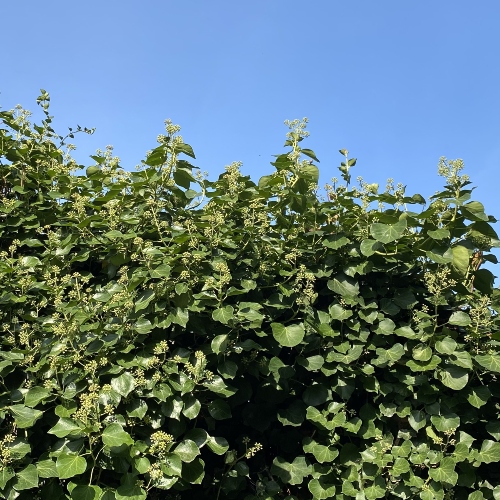
Just as everything else in the garden is winding down, ivy bursts into flower. Those little greenish-yellow pom-poms appear from September right through to November and they are absolutely packed with nectar and pollen.
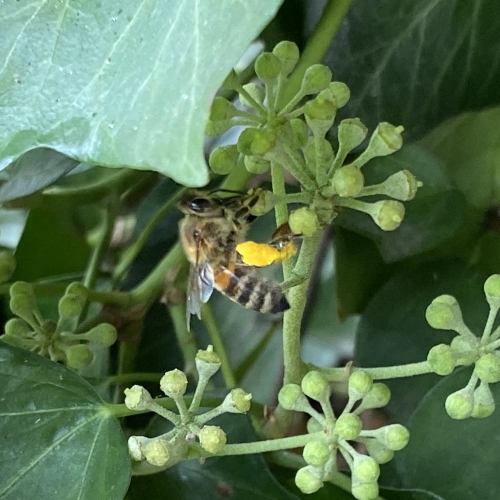
Stand next to a patch of flowering ivy on a sunny afternoon and just listen – it hums! Honeybees, bumblebees, hoverflies and late red admirals are all tucking in. There’s even a bee named after it, the ivy bee, whose whole year revolves around the ivy in flower.
My own bees are out foraging on it now, bringing in their last big harvest before winter – can you spot those huge packs of pollen on her legs? That’s full of protein and is used to feed the developing larva back in the hive. Ivy honey, made from the nectar hidden deep in the flower, is quite something too – it sets fast and has a strong, distinctive flavour. It’s not one for the jar, so we leave it for the bees to see them through the cold months.
Remember, without bees we’d lose so many of the foods we love to eat, so every late flower that feeds them counts.
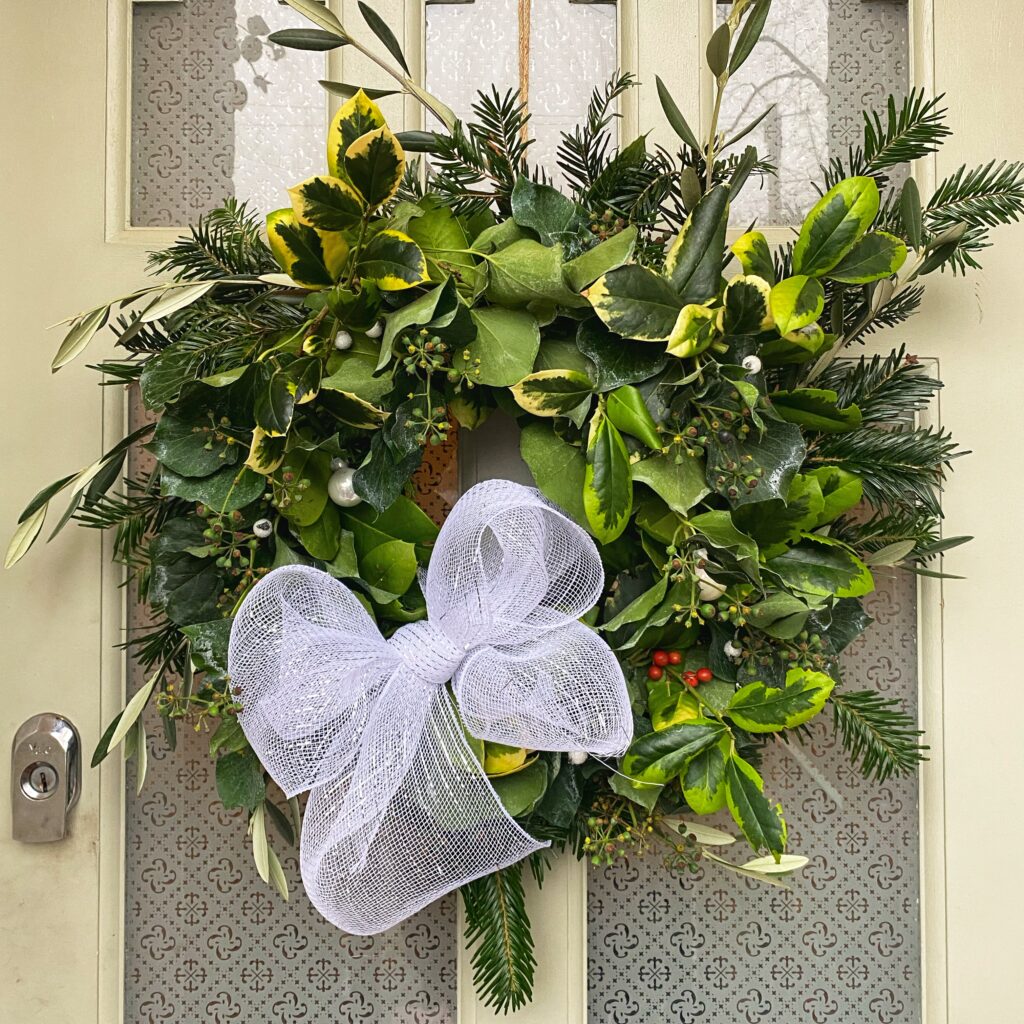
Berries (and tendrils) for Christmas
Once the flowers fade, clusters of berries start to form, ripening slowly from green to a deep, shiny black. Add those long trailing tendrils and you have the makings of the most beautiful Christmas decorations. Wind it around a wreath, drape it along the mantelpiece or tuck it around a candle on the table (safely away from the flame, please). Ivy has been part of Christmas greenery for centuries – think of The Holly and the Ivy – and there’s something lovely about bringing a bit of the garden indoors to celebrate. As usual, we are hosting many Christmas Wreaths courses in early December and would love you to join us.
 Birds
Birds
Ivy berries don’t fully ripen until late winter, just when wild food for birds is at its scarcest. Blackbirds, thrushes, woodpigeons and blackcaps all rely on them to get through the leanest weeks. They’re surprisingly rich in fat too, perfect for helping the birds stay warm. Just a quick word of caution: ivy berries aren’t safe for humans to eat – all the more reason to leave them for the birds.
Thick, evergreen ivy also gives birds shelter from wind and frost and a cosy place to roost on a chilly night. Then, come spring, wrens, robins and blackbirds love to tuck their nests deep inside.
 So, when can I cut it?
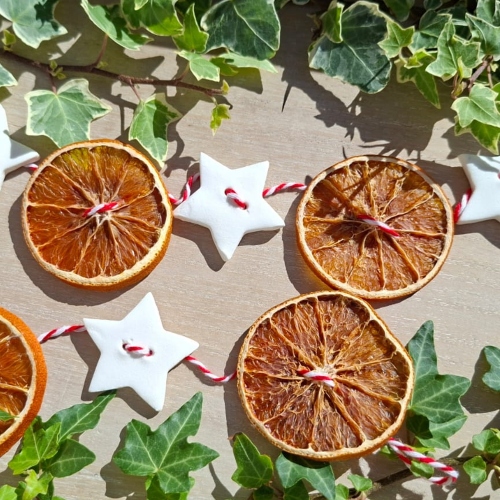
If your ivy really has got a bit too much, January into early February is the time to tackle it. The bees have finished with the flowers, you’ve gathered some in to make Christmas Decorations (have you seen our new course on 10th December?) and you’re ahead of the nesting season, which gets going by March. Trim rather than clear if you can, and leave a few berry-laden stems for the birds to finish off.
So this autumn, let the ivy be. Enjoy the buzz of the bees, bring a little inside for Christmas and leave the rest for the birds.
Enjoy the greenery and leave the clearing up to the new year..
Coming up at Hen Corner:
October
Family Feathers & Fun Saturday 3rd
Become a Bread Angel – Start your own Micro Bakery Tuesdays 6th + 13th (Two Day Course)
Making New Cheeses Wednesday 14th
Introduction to Making Cheese Wednesday 28th
Pasta Together Thursday 29th
November
Making New Cheeses Wednesday 11th
Making Christmas Food Gifts Tuesday 17th
Introduction to Scandinavian Baking Thursday 19th
Making Christmas Puddings – Stir Up Sunday Sunday 22nd
The Ideal Christmas Show 26th -29th
December
Making Christmas Wreaths Wed 2nd, Sat 5th, Tues 8th
Wreaths at Chiswick Flower Market Sun 6th
Making Christmas Decorations Thurs 10th
Making Linen Christmas Crackers Tues 15th
Introduction to Christmas Baking Wed 16th
Other news:
- I’m planning to give half of my allotment to perennial fruits and have recently planted gooseberries, blackcurrants and white currants
- The bees are all set for winter, I’ve treated them for varroa mite and made sure that they have enough food stores
- I’ve cleared out all the spend tomato plants from the kitchen garden and plan to slow roast the tomatoes before preserving in oil
Jobs for the week:
- Plant saffron crocus bulbs for autumn flowering and harvesting of saffron stems
- Propagate currants and grapes from hard wood cuttings
- Deep clean the chicken coops and switch their run covers from opaque to clear allowing in as much autumn sun as possible
Happy gardening, and I hope to see you soon,
Sara
Discover more from Hen Corner
Subscribe to get the latest posts sent to your email.